Want a job that pays well, gets you outdoors, and lets you travel the Great Lakes? Deck careers put you on working ships where you learn hands-on skills, work with a tight team, and move up fast – without college degrees typically required for advancement in other career fields.
Where to Start?
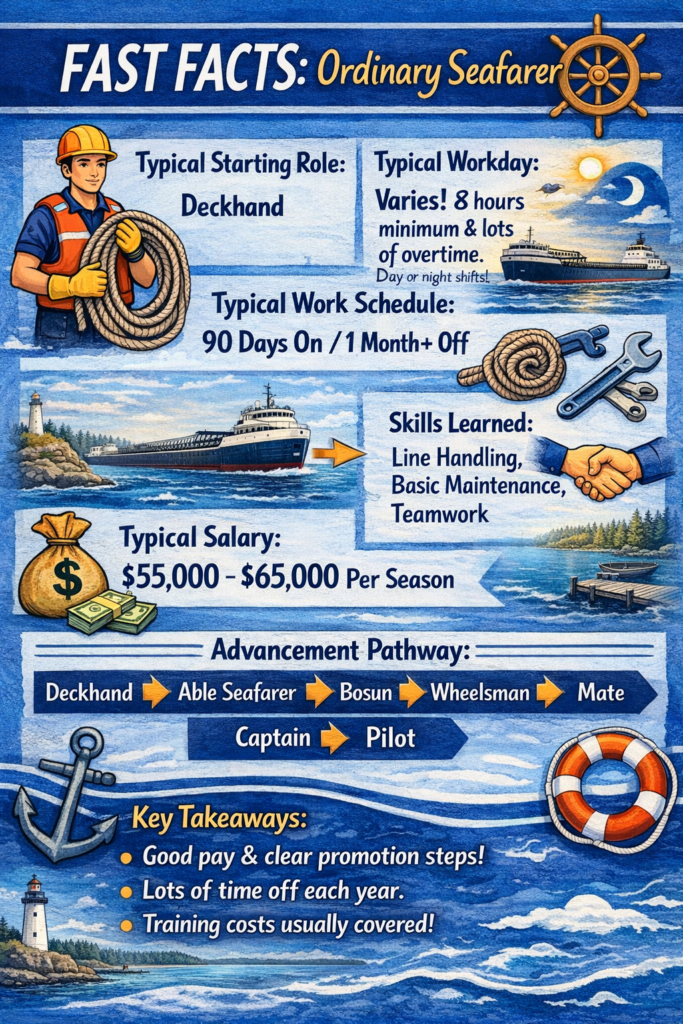
The Ordinary Seafarer, or more commonly known as deckhands are entry-level workers that play a critical role in ensuring the ship operates safely to deliver it’s cargo on time. If you enter the industry in the deck department, you will start your career as a deckhand.
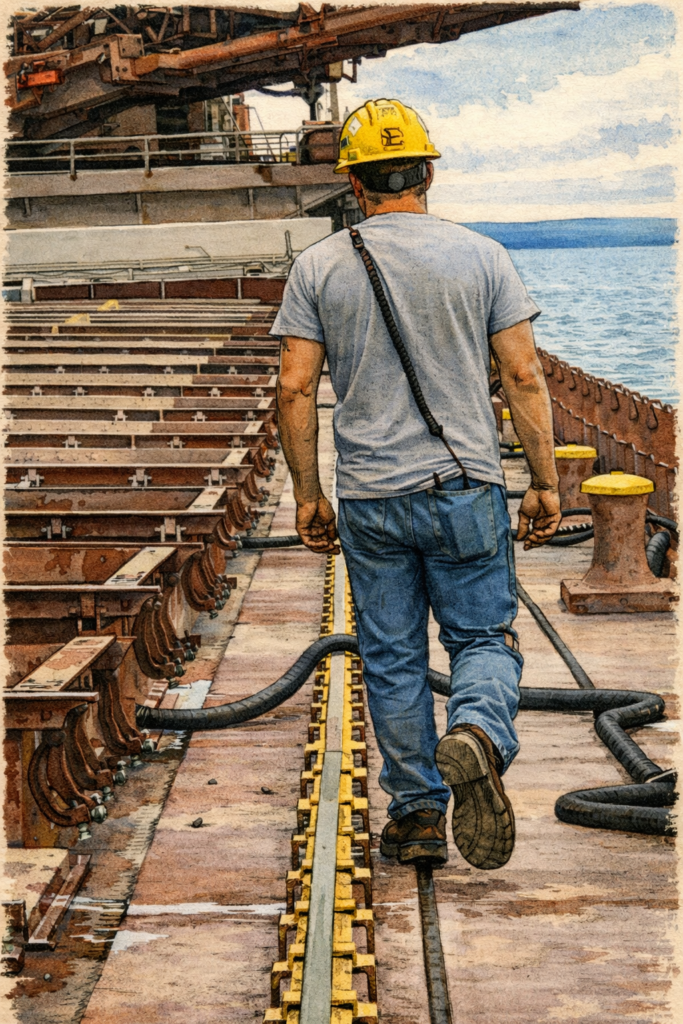
As a deckhand, you are responsible for positioning mooring lines on spiles located ashore to secure the vessel for loading or unloading – or perhaps more familiarly, hold it in position while it is raised or lowered in the Soo Locks. While underway and sailing across the lake, the deck crew works to keep the ship clean and looking sharp, taking on and completing large painting projects throughout the summer season. In port, deckhands work with the rest of the crew to assist in preparing the deck for loading operations, or working underneath the cargo holds operating gates to control the flow of cargo onto the conveyor belts and ashore to the unload docks.
As a deckhand, you will work with your hands and your shipmates to operate and care for a multi-million dollar ship all the while you travel between Duluth, Chicago, Detroit, Cleveland, Buffalo, and sometimes as far as Quebec City.
With nothing more than a High School Diploma, TWIC, and a Merchant Mariner Credential, you can embark on a career that allows for promotion to Pilot, earning nearly $500,000 (that’s not a mistake, that is half a million) a year.
Advancement Pathway
There is only one way to the Captain’s seat, and that’s a number of years spent gaining experience in the deck department working up through the ranks. On the Great Lakes, mariners typically find that they advance quickly and have ample opportunity for on-the-job training and access to company-sponsored training that allows them to reach their goals. The variety of jobs and skills available are vast, and there are opportunities to build a rewarding career in virtually any role within the Deck Department. Continue reading to learn more about the various positions.
Able Seafarer (AB)
Earning an AB endorsement on your Merchant Mariner Credential comes after at least 180 days at sea, and successful completion of a two-week course where deckhands demonstrate proficiency in knots and splices, mooring and anchoring operations, firefighting, lifeboat operation, and bridge watchkeeping procedures. In most cases, the costs of these courses are covered by the employer. Upon earning your endorsement as an Able Seafarer and Lifeboat Operator, you can advance to other positions within the deck department where you could earn around $100,000 per season.
Deck AB
Deck AB’s are skilled deckhands that have more responsibility. They stand watches as necessary, otherwise they work a varying schedule doing things like operating powerful mooring winches, running deck machinery, and training junior crew members. These responsibilities come with a significant pay raise, and every day worked counts toward the required time to advance to higher positions.
Boatswain (Bosun)
The Bosun is the front-line supervisor on deck, assigning maintenance jobs and other tasks to crew, ensuring safety and equipment readiness. People in this leadership role enjoy the highest wages among the deck crew, and many have made successful careers here. Others enjoy the visibility as a leader working their way up to more advanced positions within the deck department. To become a Bosun, one must demonstrate strong seamanship and leadership skills and have a strong safety record.
Wheelsman
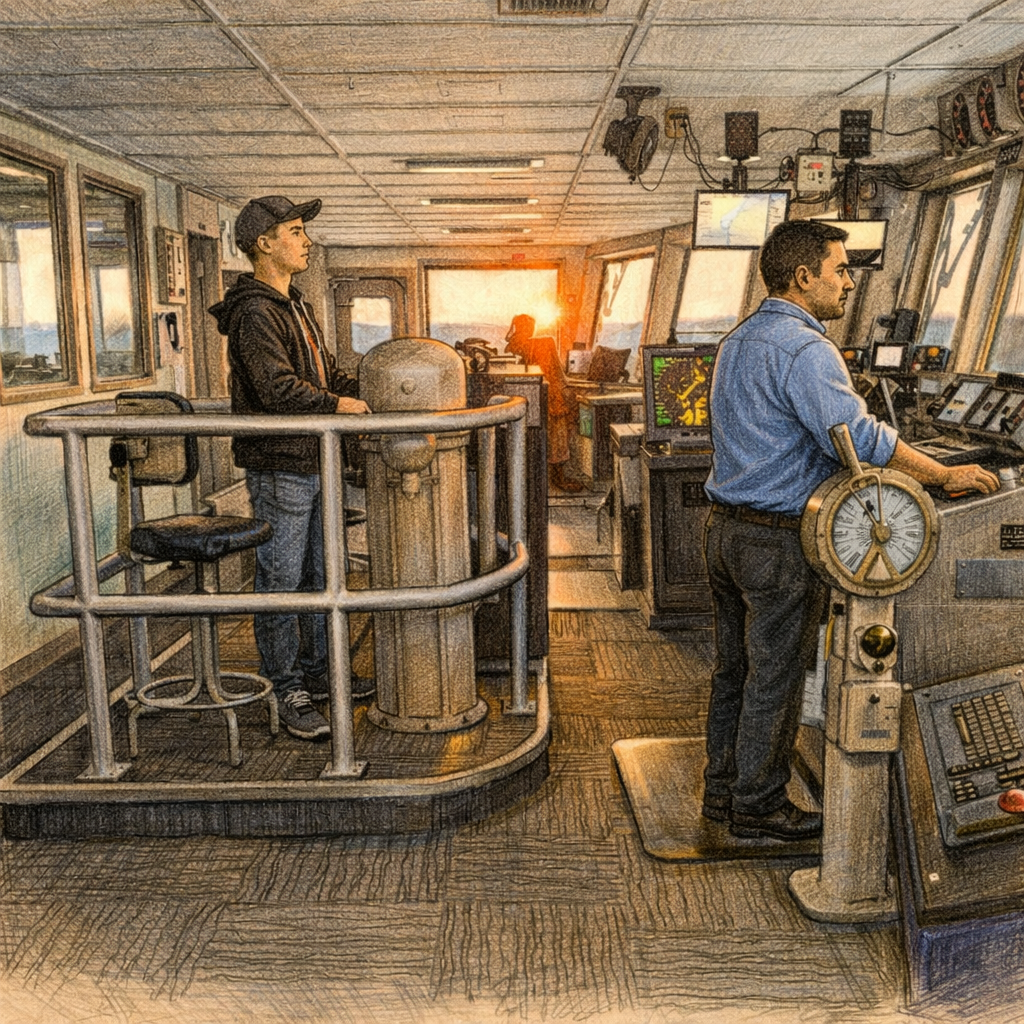
Many are surprised to know that it isn’t the captain who holds the wheel and turns the ship. This task is delegated to the Wheelsman – an AB who works with the Mate and Captain to turn the vessel and maintain its course through the winding rivers and harbors throughout the Great Lakes.
While on the open lake, Wheelsman assist as lookouts who monitor RADAR and the waters ahead for hazards and other boaters who may stray too close to the ships path. In port, Wheelsman guard ladders and gangways ensuring only authorized people are able to board the ship, and often assist in running the ship’s conveyor system monitoring belt speeds and cargo discharge rates.
Many have made long careers out of the Wheelsman role, enjoying the routine schedule aboard ship while others use the experience as a gateway toward working as a Mate, Captain, or even Pilot.
Deck Officers
Members of the deck crew can quickly rise to the rank of Mate where they take on new responsibilities managing and navigating the ship. People in these roles often say they enjoy the challenge of supervising the crew and the challenges associated with piloting in confined waterways or developing complex load plans. If your eventual goal is to work as a Deck Officer, you will be pleased to know that the time passes quickly on the lakes and in no time, you will be boarding a ship for your first hitch as a new 3rd Mate. Continue reading to learn more about the licensed roles available to you in the Deck Department.
Mate
Mate’s are licensed officers that serve as supervisors of their respective watches, each with different administrative responsibilities. The 3rd Mate usually serves as the ship’s safety officer, making inspections of lifesaving and firefighting equipment while the 2nd Mate handles paperwork related to crew documents and updates the vessels navigation equipment with the latest chart updates and other relevant information. The 1st Mate leads the department, directing shipboard maintenance activities and managing payroll, as well as developing load plans and supervising cargo operations. On the Great Lakes, Mates hold pilotage endorsements which demonstrate strong knowledge of navigation routes across all lakes and rivers, and the lights, buoys, and hazards to navigation that exist on their route.
After logging 1080 days at sea, AB’s can take exams with the U.S. Coast Guard to earn their Mate’s License. Generally, the company or the union cover the costs associated with the classes required to obtain a license while Captains and experienced Mates provide on the job training.
Many make fulfilling careers as a Mate, enjoying significant vacation time, benefits, and wages that near $200,000 for those serving as the ship’s 1st Mate. For those looking to advance to the Captain’s role, demonstrated competence as a Mate, additional testing with the U.S. Coast Guard, and a few years of experience are required to eventually assume command of the ship.
Captain
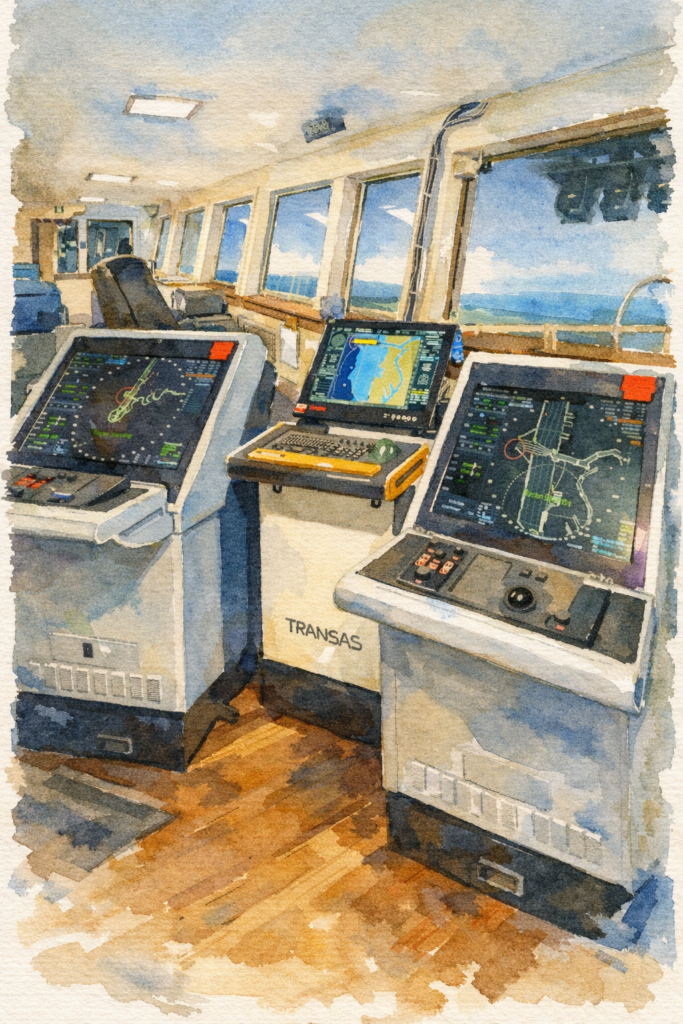
The Captain is the top licensed officer of the ship, responsible for all aspects of its safe and timely operation. The Captain works closely with each of the department heads to ensure everyone is working together effectively and safely. Captains on the Great Lakes also maneuver their ships into and out of port – sometimes navigating winding and complex waterways such as the Cuyahoga River in Cleveland or the Soo Locks where they have only five feet to spare while maneuvering.
To take command of a ship, a Captain must have demonstrated years of working competently as a Mate, understanding the various operations of the ship and safely piloting the rivers separating the Great Lakes.
Pilot
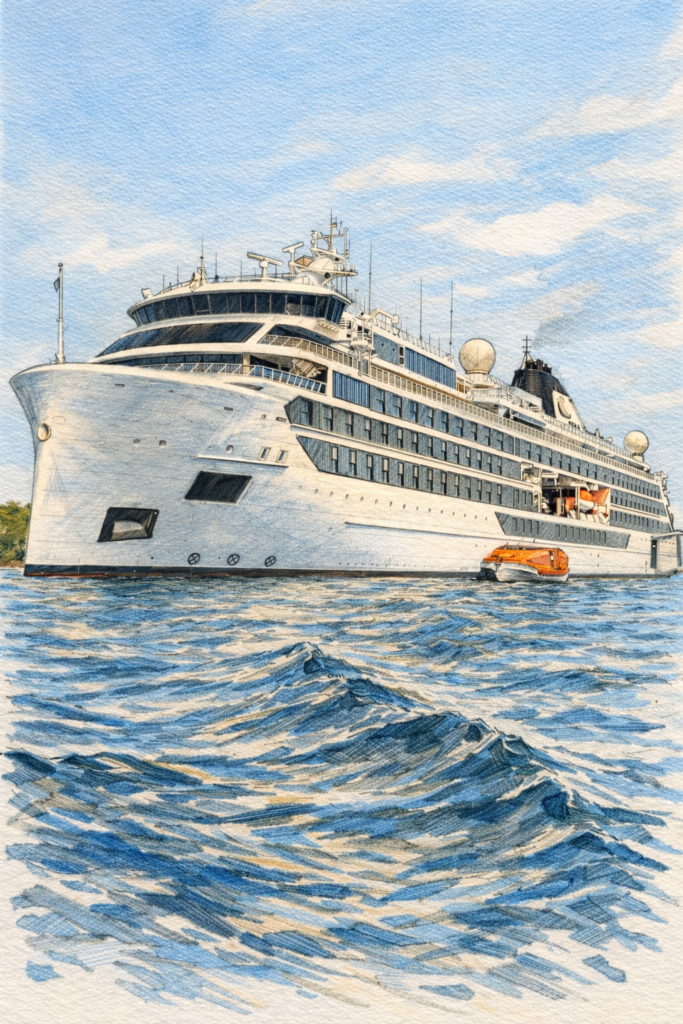
If you have ever seen a cruise ship on the Great Lakes, you have seen a Pilot at work. Pilots are experienced Great Lakes Captains who guide foreign ships and their crews safely throughout the entire Great Lakes system. Due to their unique experience navigating challenging waterways on a regular basis, Great Lakes Captains and Pilots are among the most skilled in the world. Foreign vessels employ them for their skill not only for the safety of their own ship and crew, but to ensure the safety of the environment and surrounding maritime infrastructure. This important responsibility nets a healthy wage – experienced Pilots earn over $450,000 each year!