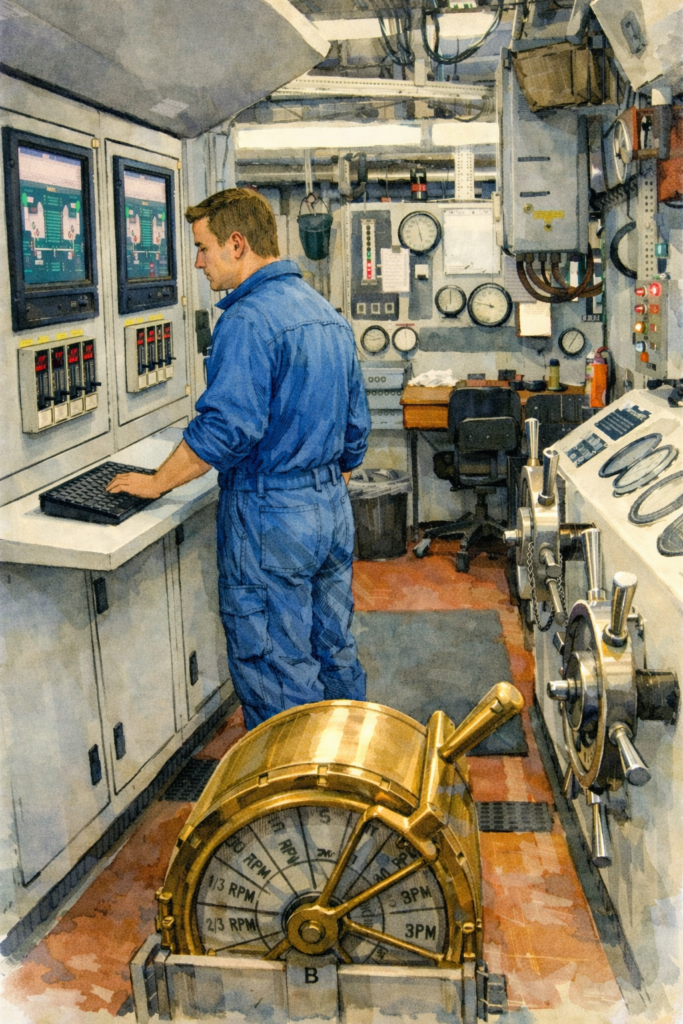
Love machines, troubleshooting, and hands-on problem solving? Careers in the Engineering department keep the massive and complex ships of the Great Lakes running. Get technical skills, excellent pay, and travel the lakes while you work in a field that has clear pathways for promotion – no college degree required.
Where to Start?
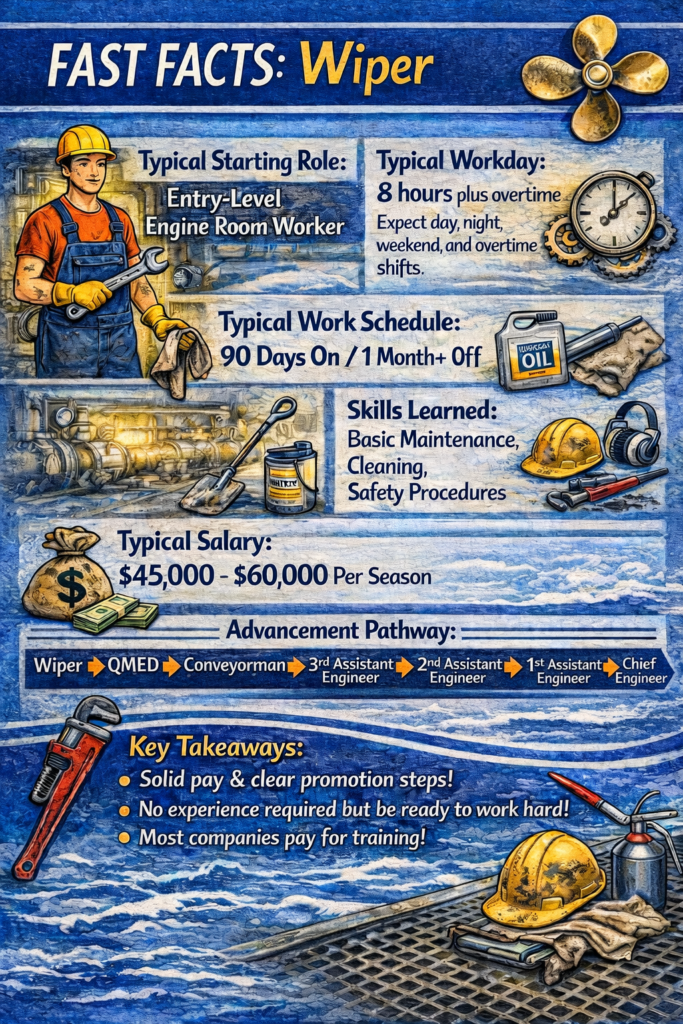
As you enter the field of marine engineering, you will start your career working as what’s known as a Wiper. The role gets its name from back when ship’s were powered by coal fired steam plants, and several people in entry level positions were tasked with cleaning coal, oil, and grease from the many parts of the propulsion system. These days, most ships are powered by modern diesel engines that are automated and computer controlled. However, the need for basic maintenance and upkeep still remains.
As a wiper, you are responsible for maintaining the cleanliness and order of the engine room and associated spaces. In addition, you will often assist the engineering crew with maintenance of equipment, machinery, and the ship’s many systems. In this role, you will learn many fundamental skills required to promote up to higher positions. With time, you will gain familiarity of marine electrical, plumbing, mechanical and ventilation systems, and understand more about diesel or steam propulsion systems depending on the type of vessel you are working on.
As a wiper, you will work with your hands in a strong team oriented environment as you maintain and care for a multi-million dollar ship while traveling between Duluth, Chicago, Detroit, Cleveland, Buffalo, and sometimes as far as Quebec City.
With nothing more than a High School Diploma, TWIC, and a Merchant Mariner Credential, you can embark on a career where you can become highly skilled in all aspects of marine engineering, with ample opportunity to advance to the highest ranks, commanding a salary over $250,000 a year!
Advancement Pathway
A career in marine engineering affords a wide range of skills. In addition to learning things in nearly every aspect of engineering – electrical, plumbing, hydraulics, pneumatics, mechanical and ventilation – you will learn these skills on vessels equipped with diesel engines on the cutting edge of modern technology, diesels more commonly found on freight locomotives, oil-fired steam turbines, or even a hand-fired coal burning steam plant found on the S.S. Badger. In the engine room, mariners discover that there are ample opportunities to advance quickly through the ranks and that crews are willing to provide the hands-on training needed to be successful at any level within the engineering department.
QMED (Qualified Member of the Engine Department)
After accumulating 6 months of time spent in the engine room aboard the ship, Wipers can attend a short series of classes, the cost of which is generally covered by the shipping company or union, and upon successful completion they can begin work as a QMED. In addition to enjoying a significant raise in pay that can total as high as $85,000 a season, QMEDs take on additional responsibilities and more challenging tasks.
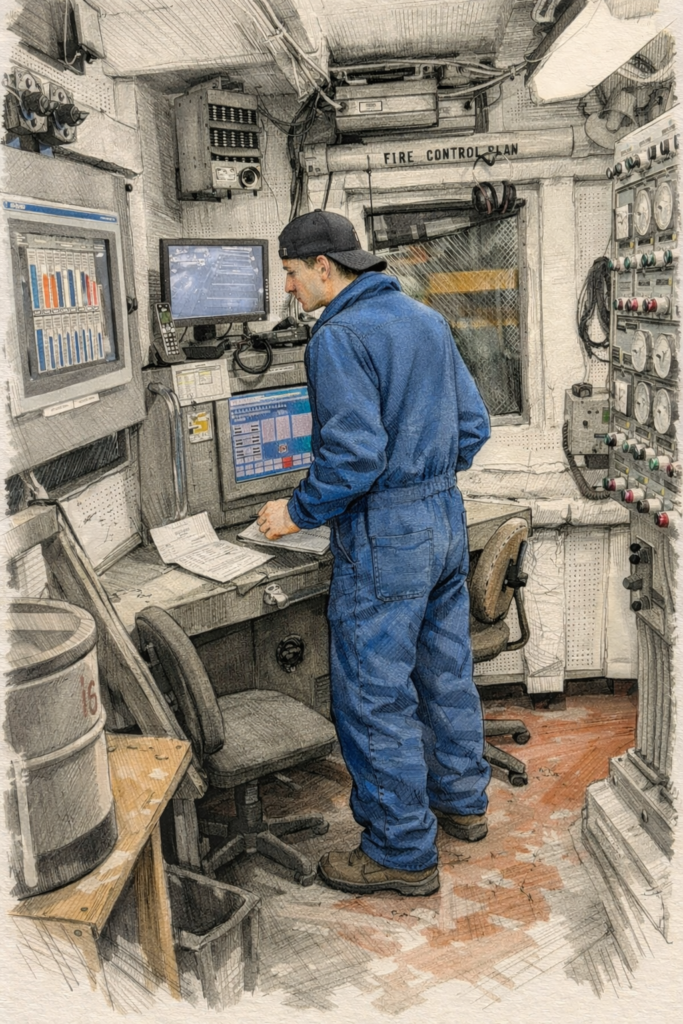
QMED’s work independently as specialized assistants to the ship’s engineers, helping with maintenance and troubleshooting of electrical, plumbing, mechanical, ventilation, and hydraulic systems. They will perform regular rounds in the engine room and elsewhere around the ship ensuring all fluid levels are correct, operating temperatures are normal, and that moving parts are properly lubricated.
When the ship takes on fuel or pumps off waste oil products, the QMED checks the level of the bunkers (the term used to describe the ship’s fuel tanks) and relays information to the engineer in charge, preventing a tank from overfilling and causing a spill.
In port, the QMED assists with taking on engine parts and supplies, ensuring all needed items are accounted for and neatly stowed in the engine room. Underway, the QMED helps with maintaining order and cleanliness in the department, chipping rust and painting spaces to keep the engine room looking neat and orderly. Having a well organized and clean engine room is critical to ensuring the entire engineering team can respond quickly to any need for repair or overhaul, minimizing costly port delays.
Conveyorman
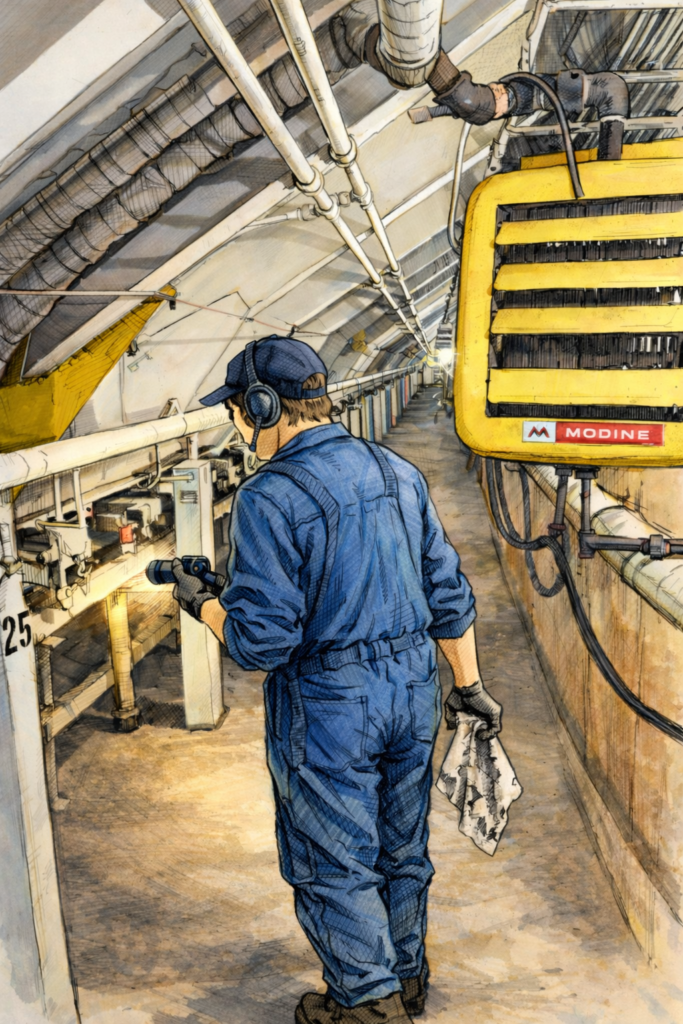
One of the most unique abilities of Great Lakes ships is their ability to unload their own cargo without the aide of shoreside equipment, hence the term “self-unloaders”. Each has an intricate system of conveyorbelts, pulleys, bearings, and rollers, all of which fall under the care of the ship’s conveyorman.
The conveyorman is a highly specialized member of the engineering department, with a strong working knowledge of the equipment that makes up the ship’s unloading gear. Often, the conveyorman works independantly performing regular maintenance and inspections, checking for faulty rollers and bearings while underway. Additionally, they inspect and maintain the massive hydraulic system used to actuate the several gates that control the flow of cargo onto the ships belt.
During the unloading process, the conveyorman assists other crew assigned to operating the gates. They perform rounds throughout the entire system, including the large boom used to discharge cargo ashore onto the dock. If they discover a bad roller or bearing, they take quick action to remove or replace the part as quickly as possible to reduce costly downtime and delays.
The conveyorman also acts as a trainer, not only to their assistants, but also to those who are assigned to run gates. Often times, they are one of few people that know how to get tricky cargo to flow from the gates. Other times, they act as project leaders who oversee large jobs such as gate replacement or changing out larger bearings and pulleys. When there are larger projects taking place in the engine room, they will often assist alongside the QMEDs to complete challenging engine work.
Engine Officers
Members of the engineering crew can advance quickly to the role of Assistant Engineer, where they are responsible for supervising a watch (a nautical term for shift) and maintaining the ships systems. People in these roles often say they enjoy the challenge of troubleshooting complex problems with engines and other equipment. If your eventual goal is to work as an Engineering Officer, you will be pleased to know that time passes quickly in the junior ratings, and in no time at all you will have the time and experience you need to take the required exams. Before you know it, you will be signing on as a 3rd Assistant Engineer for your first hitch in a licensed capacity. In these positions, it is common to see wages that exceed $150,000 per season, with senior Assistant Engineers earning even more.
Assistant Engineer
Assistant Engineers often stand watches to ensure round the clock supervision of the ship’s engines, equipment, and members of the engineering crew. On other ships that are highly modernized and automated, they work day shifts and share the responsibility of being on-call to respond to any alarms or needs from other members of the ships crew.
Many times, each Assistant Engineer is responsible for a specific component of the ships systems – be it plumbing and sewer treatment systems, mechanical and ventilation, electrical, or the boiler systems. The 1st Assistant Engineer generally supervises daily maintenance, as well as any major repairs to the ships engines or equipment. Whenever a major maintenance or repair project takes place, several Assistant Engineers will work together along with the engineering crew to make fast repairs to reduce costly downtime and delay.
Chief Engineer
The Chief Engineer acts as the department head over all things engineering. He is the point of contact for the ship’s Captain and shore-side engineering representatives responsible for communicating needs and overseeing all aspects of the Engineering Department. The Chief Engineer is the ship’s “expert” in terms of mechanical know-how, commanding a salary often exceeding $200,000 per year in return for their specialized knowledge. In some cases, Chief Engineers are called ashore by shore-side managers to oversee several vessels in the fleet as a Fleet Engineer or Engineering Superintendent.